Knowledge
Tarot Card Meanings – The Major Arcana Fully Explained
What do the 22 cards of the Major Arcana mean? From The Fool to The World – here you'll find the meaning of each tarot card, deeply and understandably explained.
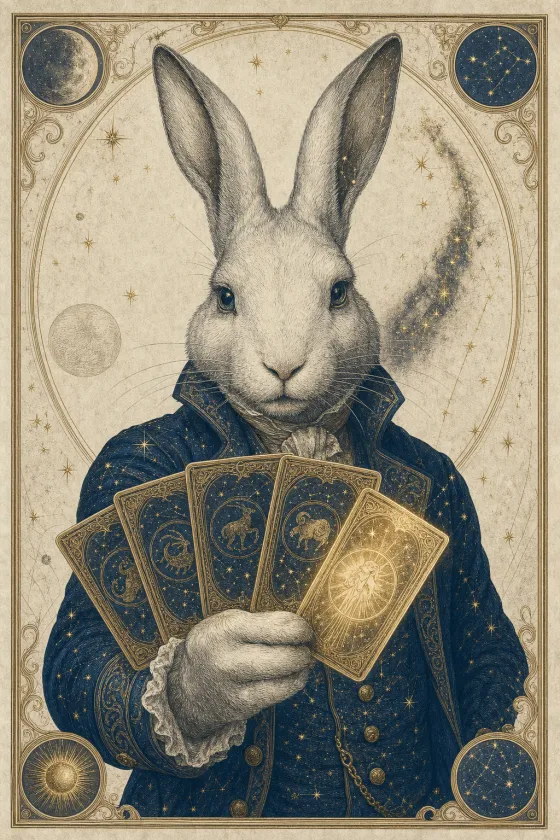
The 22 cards of the Major Arcana are the heart of every tarot deck – and the most direct path to your inner truth. Each card embodies an archetype, a life moment, a quality of the human soul. Tarot card meanings truly understanding doesn't mean memorizing symbols: it means reading your own story. Here you'll find all 22 cards of the Major Arcana – clearly explained, without esoteric jargon, but with real depth.
What is the Major Arcana?
A complete tarot deck consists of 78 cards: 22 Major Arcana cards and 56 Minor Arcana cards. While the Minor Arcana depicts everyday life – relationships, decisions, career questions – the Major Arcana meaning tells of the great life themes: change, loss, departure, completion.
It follows the so-called Fool's Journey: a cycle of consciousness from a blank slate to mature wholeness. The symbols come from Kabbalah, astrology, alchemy, and Christian mysticism – yet remain timelessly universal. That makes the Major Arcana the most powerful reference when you want to learn tarot cards.
The First Eight Arcana: Departure and Outer World (0 to VII)
The first eight cards accompany the entry into life: trust, willpower, intuition, abundance, structure, tradition, decision, and triumph. They show how we relate to the outer world.
0 – The Fool: New Beginning and Basic Trust
The Fool stands at the edge – and jumps. He stands for the courageous new beginning without guarantee, for basic trust and the willingness to see life as an adventure. This card is the beginning of all journeys.
I – The Magician: Willpower and Manifestation
All four elements lie before him on the table. The Magician is concentrated willpower – the ability to turn ideas into reality. He asks: What do you already have in your hands without using it?
II – The High Priestess: Intuition and Hidden Knowledge
Silent, calm, deep. The High Priestess holds hidden knowledge. She teaches: Not everything must be spoken. Trust your intuition – even if you cannot explain it rationally.
III – The Empress: Abundance, Nature, and Feminine Power
Venus rules this card. The Empress stands for abundance, creativity, and trust in natural processes. True growth cannot be forced – it must be nurtured.
IV – The Emperor: Structure, Authority, and Responsibility
The Emperor brings order to chaos. He stands for authority and responsibility. His reminder: True leadership arises from inner maturity, not control.
V – The Hierophant: Tradition and Spiritual Guidance
Tradition, community, spiritual guidance. The Hierophant asks which beliefs you follow – and why. He can symbolize healing structure as well as blind conformity.
VI – The Lovers: Decision and Connection
Less romantic love, more life choice. The Lovers demand clarity: Which connection – to a person, a life path, a value – do you truly choose consciously?
VII – The Chariot: Willpower and Triumph
The Charioteer steers conflicting forces through pure discipline. Triumph is possible – but only if you can hold opposites within you without being torn apart by them.
The Middle Journey: Inner Trials (VIII to XIV)
From card VIII onward, everything turns inward. These seven Arcana deal with inner strength, solitude, fate, truth, letting go, transformation, and balance. They are the rites of passage no human can avoid.
VIII – Strength: Inner Strength and Courage
A woman tames a lion – not with force, but with gentleness. Inner strength beats raw power. This card encourages: Be fearless without becoming hard.
IX – The Hermit: Retreat, Wisdom, and Search
With the lantern alone in the dark, the Hermit seeks his own truth. Retreat here is not failure but a prerequisite: Some answers ripen only in silence.
X – Wheel of Fortune: Cycles and Turning Points
Everything turns. The Wheel of Fortune shows: Turning points do not come by chance. The crucial question is whether you are ready for change – or will be overwhelmed by it.
XI – Justice: Truth and Balance
Scales and sword. Justice stands not for punishment but for consequence. What you send into the world returns to you – honestly, without excuses.
XII – The Hanged Man: Letting Go and New Perspective
He hangs willingly, calmly. The Hanged Man teaches: Sometimes pausing is the bravest act. A new perspective arises only when you stop fighting the unchangeable.
XIII – Death: Change and Transformation
Rarely does this card mean physical death. It stands for transformation: the end of a phase, the dying of the old so that new can emerge. Tarot online learning means demystifying this card.
XIV – Temperance: Balance and Integration
An angel slowly mixes water between two cups. Temperance is the art of integration: balancing opposites, taking time, forcing nothing – and trusting that the right thing will emerge.
Shadow, Upheaval, and Completion (XV to XXI)
The last seven Arcana are the most intense of the tarot card list. They confront us with bonds, breakdowns, and illusions – and at the end gift us with hope, clarity, and wholeness.
XV – The Devil: Bonds and Shadow Work
The chains he shows are loose. They hold only as long as you believe you must. The Devil reveals dependencies and shadow areas – the places where we limit ourselves.
XVI – The Tower: Upheaval and Liberation
Lightning, collapse, upheaval. The Tower breaks down what stood on shaky ground. This is painful – but often liberating. What comes after is more real than what was before.
XVII – The Star: Hope and Renewal
After the storm: stillness, stars, a calm spring. The Star is pure hope. It says: You are not lost. Trust may grow again, without proof.
XVIII – The Moon: Illusion, Subconscious, and Intuition
The Moon deceives, reflects, hides. It rules the subconscious and fears. At the same time, it carries an invitation: Go deeper. What you fear knows the truth about you.
XIX – The Sun: Joy, Clarity, and Success
Radiant, clear, warm. The Sun brings joy, success, and vitality. It is one of the most positive cards in the deck – and reminds us that light needs no magic to work.
XX – Judgement: Awakening and Realignment
The call to resurrection. Judgement stands for awakening and heeding a deeper calling. It is the card of the moment when you know: Now is the time to act.
XXI – The World: Completion and Integration
The World closes the circle. Completion, integration, wholeness – the Fool has made his journey. All experiences have become part of you. One cycle ends, the next begins.
How to Draw Your Daily Card – with the Nova App
Knowing the Major Arcana is the first step. The second is daily practice. In the NOVA App, you draw your personal daily tarot card every morning – with a reading tailored to your zodiac sign, life path number, and the current moon phase. No generic texts, but real cosmic context for your day.
Additionally, you'll find moon ritual guides for New Moon and Full Moon – the most powerful moments for a deeper tarot spread. Try the app for free and experience how the Major Arcana comes alive when it speaks to your personal cosmic profile.
What do the 22 cards of the Major Arcana mean? +
The 22 cards of the Major Arcana each represent a universal life moment or archetype – from The Fool (new beginning, basic trust) to The World (completion, wholeness). Together they form the so-called Fool's Journey: a cycle of consciousness that depicts all stages of human experience.
What is the difference between Major and Minor Arcana? +
The Major Arcana comprises the 22 main cards and describes profound life themes and spiritual development stages. The Minor Arcana consists of 56 cards in four suits and illuminates everyday life – relationships, decisions, finances, conflicts. In a spread, the Major Arcana shows the overarching themes, the Minor Arcana the concrete circumstances.
How do I learn tarot cards as a beginner? +
The best way is to start with the Major Arcana. Learn the 22 cards in order – they tell a connected story. Draw a card daily, note your spontaneous reaction, and only then compare it with a meaning. This daily practice is more valuable than any book.
What does the Death card (XIII) in tarot really mean? +
The Death card very rarely means physical death. It stands for transformation, the end of a phase, and the necessary closure so that something new can emerge. It is one of the most misinterpreted cards – and actually often a sign of long-overdue changes.
Can I draw tarot daily? +
Yes, a daily card is one of the most effective tarot practices. You draw a card in the morning, work with its energy throughout the day, and reflect in the evening on what came true. This sharpens intuition and anchors card knowledge in real life – much better than rote memorization.
Which tarot card is considered the most powerful? +
That is subjective – but The World (XXI) is considered by many to be the strongest card because it symbolizes completion and integration at the highest level. The Fool (0) is also extraordinary: he stands outside the numbering and embodies pure potential before any definition.